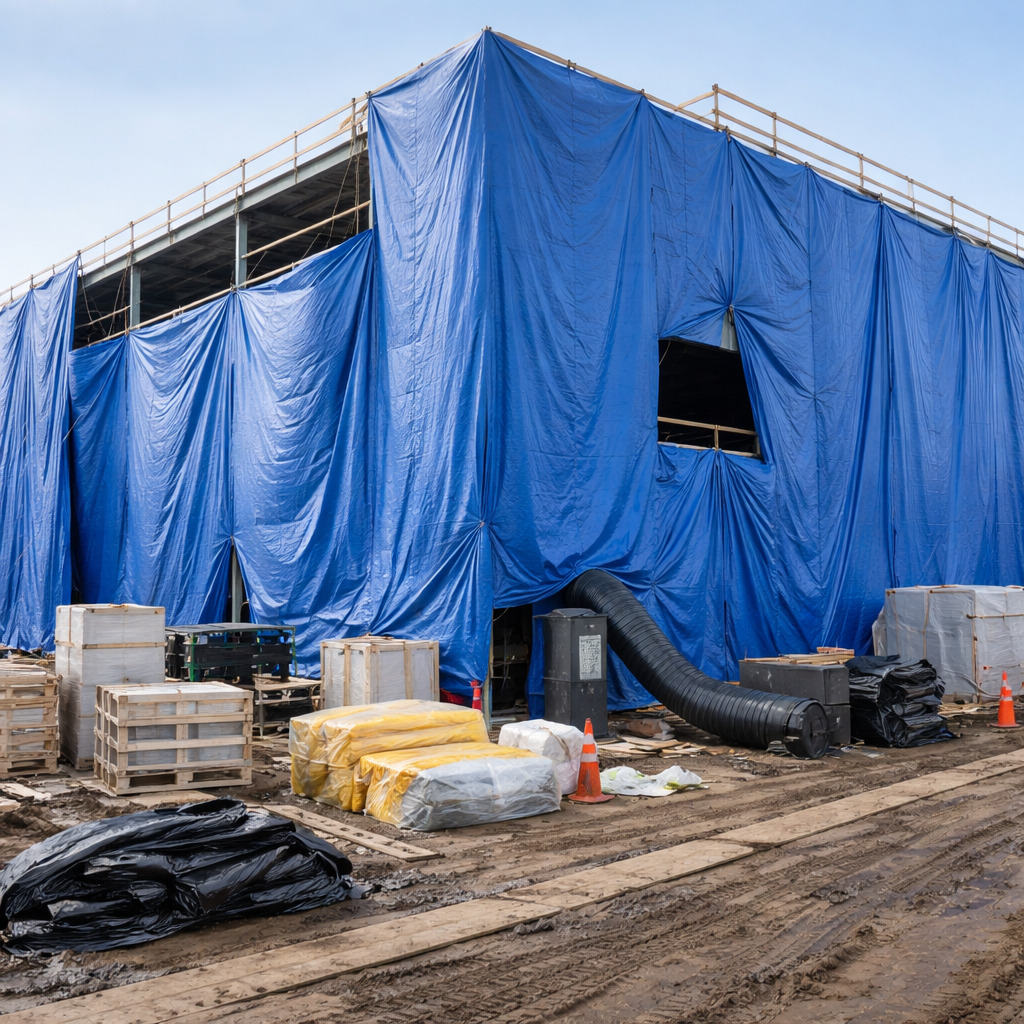

Winter is one of the most difficult seasons to perform construction work in. Snow, cold, and strong winds can often delay projects, and materials could be damaged if certain precautions are not taken. Strategically using tarpaulin not only protects workers but also helps protect job sites from the severe conditions during winter. Furthermore, with only a few practical hacks, a project will be able to proceed satisfactorily even during unfavorable weather conditions.
Why Tarpaulin is Essential in Winter Construction
Protecting Materials from Moisture and Frost
Because during winter, water or frost can easily destroy cement, wood, and paints, covering them with a high quality Tarpaulin Sheet avoids water infiltration and keeps these materials in good condition. Moreover, tarpaulins of black color absorb sunlight, therefore, slightly heating the covered areas and reducing the amount of frost gathered. In that way, materials will be ready for use at any time.
Shielding Work Areas from Wind and Snow
Tarpaulins also save the work areas from wind and snow, reducing the chances of accident injuries or delayed projects. Moreover, correctly fastened tarpaulins lead to a more Accident free working area. Consequently, the construction teams are in a better position to deliver on time amidst adverse weather conditions.
Choosing the Right Tarpaulin for Winter
Durability and Waterproof Features
Not all tarpaulins are made the same, so selection of the proper type is paramount. Durable, waterproof tarpaulins can resist heavy snow, while UV resistant ones will protect the materials on those sunny winter days. Moreover, tarpaulins with edge reinforcement and grommets are more easily secured against strong winds and, by association, can last longer.
Advantages of Black Tarpaulin
Because black tarp absorbs sunlight, this raises the temperature under the cover a little. This means that there is minimal ice formation, and sensitive materials continue to be usable. Furthermore, Black tarpaulin comes in handy when used for temporary shelters in which warmth is needed, making it quite versatile in winter construction.
Protecting Building Materials with Tarpaulin
Covering Stacks of Wood and Metal
Keeping building materials dry is one of the major uses of tarp in winter. Covering stacked wood, bags of concrete, and sheets of metal should be done in a way that the tarp is tightly secured, with no way for winds to dislodge it. This little step will reduce material damage drastically.
Overlapping Tarpaulins for Extra Protection
Overlapping of multiple tarpaulins for larger piles ensures that even during heavy snowstorms, no material is revealed. Besides that, Black Tarpaulin slightly warms up the temperature under the cover due to its color, preventing freezing and reducing delays in work due to bad weather.
Creating Temporary Shelters with Tarpaulin
Setting Up Makeshift Work Areas
Tarp can be arranged over scaffolding or poles to create temporary shelters. In so doing, accumulation of snow on the work areas is greatly reduced while workers are protected from strong winds. This helps maintain high productivity even under unfavorable weather conditions.
Using Black Tarpaulin for Warmth
Black tarp absorbs sunlight, making the inside of a shelter slightly warmer. As such, workers are able to carry out jobs in comfort, not necessarily being exposed to extreme cold conditions. Using zip ties or bungee cords to secure edges ensures the shelter remains intact during gusts of wind.
Using Tarpaulin as Ground Cover
Preventing Mud and Ice Hazards
Winter construction sites are often faced with either muddy or icy grounds. Tarp acts to cover the ground temporarily so that the materials remain dry and workers are protected from slipping hazards. In addition, tarp offers workers an easy and safe manner of moving equipment around the site.
Black Tarpaulin for Sun Melted Snow
Covering areas of mud or ice with tarp in black helps to ensure that the areas of snow would slightly melt during sunny periods. Thus, access to important parts of the construction site improves and work can be sustained without superfluous interruptions.
Protecting Equipment with Tarpaulin
Shielding Machinery from Snow and Ice
Exposed equipment is subject to rust, corrosion, and other types of mechanical damage. A durable tarp cover protects machinery, keeping equipment operational and safe to use. Consequently, workers consider it one of the most effective measures for maintaining project timelines.
Layering Tarpaulins for Large Equipment
More extensive equipment would include additional protection by overlaying tarps on top of or in layers. Black tarp reduces ice accumulation on the surfaces of metallic equipment, which prolongs the equipment’s life and lowers the need for costly repairs.
Insulating Work Areas with Tarpaulin
Reducing Drafts in Active Work Zones
Wrapping scaffolding or partially completed buildings with tarp greatly reduces drafts. This means that laborers can perform detailed work like pouring concrete or painting, even in cold winter conditions.
Black Tarpaulin for Microclimate Warmth
Black tarp creates a microclimate that is slightly warmer under the cover. Consequently, workers can perform tasks that are temperature sensitive with greater efficiency and feel comfortable during the entire day.
Preventing Snow Damage with Tarpaulin
Protecting Roofs and Unfinished Structures
Accumulation of snow provides serious threats to construction materials and partially completed buildings. To avoid that, draping tarp over roofs or unfinished sections minimizes snow buildup and prevents water damage when the snow melts.
Black Tarpaulin for Faster Snow Melting
The black tarp assists in faster melting of snow in sunny periods, thereby lessening the stress on the structure and protecting materials effectively. As a result, this simple life hack can save so much time and money.
Quick Repairs Using Tarpaulin
Temporary Fixes for Winter Damage
Broken windows, roof leaks, or torn insulation all a part of unexpected winter damage might delay construction projects. Tarps offer quick, temporary repairs that eliminate further exposure to moisture and cold, making it safe to continue working.
Benefits of Black Tarpaulin in Emergencies
Since workers use black tarp for emergency fixes, it slightly warms the covered area and prevents further freezing damage. This allows temporary repairs to remain effective until workers apply permanent solutions.
Securing Tarpaulin Effectively
Anchoring and Reinforcement
A tarp is effective since it is securely fastened. Rope, bungee cords, or even sandbags will keep the cover in place even against heavy winds. Moreover, checking tarp after storms ensures that materials and equipment remain fully protected.
Overlapping for Wind Protection
Overlapping tarps lend added stability, notably in regions where winds are unusually strong. Thus, torn covers or ruffled materials are less common, protecting the project from weather related delays.
Storing Tarpaulin for Future Use
Cleaning and Drying After Use
Proper storage ensures tarp lasts for many winters. Cleaning off dirt, snow, and ice fragments, followed by thorough drying, prevents mold growth and preserves material integrity.
Preparing Black Tarp for Winter Projects
Because it is made of stronger material, workers need to fold black tarp carefully to avoid creases or cracks. Regular inspection allows workers to prepare tarps for future winter projects, saving time when the next cold season begins. Read Best Articles
Combining Tarp with Other Protective Materials
Using Insulation Blankets
For example, workers can use tarps together with insulation blankets to reduce heat loss from work areas. Workers therefore experience improved comfort while the critical material remains protected against extreme cold.
Pairing with Temporary Structures
The use of tarp with wooden or metal frames makes for more stable shelters that can also endure bad weather. Black tarp increases heat retention and is also waterproof, which means work can carry on in safety even in winter conditions.
Conclusion
From freezing temperatures to snow and ice hazards, winter construction offers a multitude of challenges. Tarp, particularly black tarp, helps with a very simple, effective way to protect materials, equipment, and workspaces from the elements. Workers use tarps for everything from temporary shelters to ground covers, insulation, and emergency repairs, helping projects continue safely and efficiently. Selection, securing, and storing them properly will ensure that tarps remain reliable tools for years, which makes winter construction less stressful and more manageable.
Frequently Asked Questions (FAQs)
Q: What is the best type of tarp for winter construction projects?
The best tarp for winter construction is durable and waterproof with reinforced edges and grommets. Black tarp, in particular, can be helpful as it absorbs sunlight, slightly warming covered areas, and cutting down on frost buildup.
Q: How can tarpaulin protect the construction materials in winter?
Tarpaulin protects materials such as wood, concrete, and metal from moisture, snow, and ice. Protecting material stacks by placing a cover over it and weighing down or securing the edges will prevent damage and make sure that those materials are usable all season.
Q: Can workers use tarpaulin to create temporary working shelters?
Yes, workers can lay tarp on top of scaffolding or iron poles to provide temporary shelter. Black tarp is good to use because it absorbs much heat, making it a bit warmer inside and thus keeping the workers in comfort to continue their work.
Q: How do workers fix the tarpaulin to prevent strong winds from blowing it away?
Anchor tarpaulins with ropes, bungee cords, or sandbags. Increased overlapping of tarps provides extra strength, and regular inspections after storms will assure that material and equipment are kept dry.