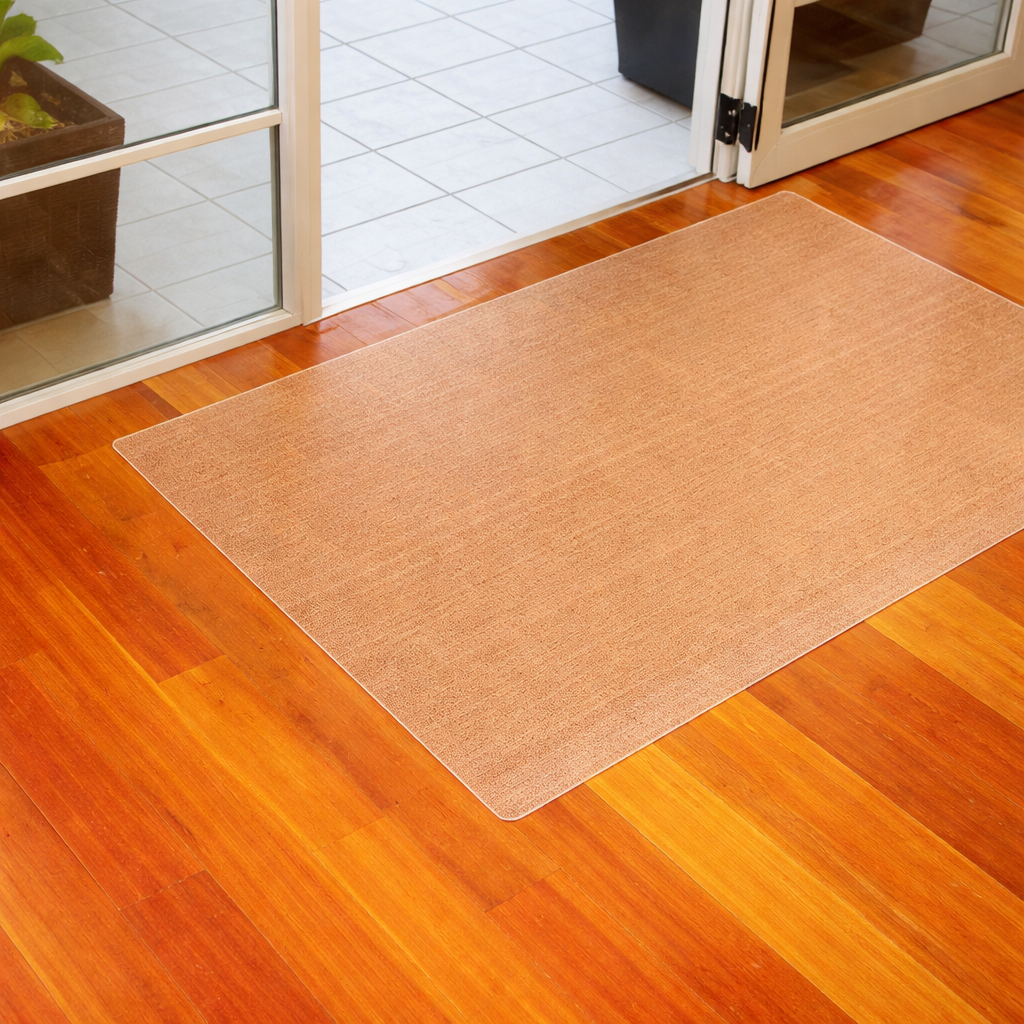

Coconut husks are woven into coir mats, which are more than just floor coverings. Coir Mats are a combination of natural sustainability, practicality, and rustic looks. Coir has been made from coconut husks for centuries due to its intense durability, and it is used in commercial and residential entrance mats today.
Benefits of Coir Mats
Coir’s Outstanding Dirt and Moisture Trapping Ability
The primary purpose of all entrance mats is to trap dirt and moisture from shoes; however, coir does this exceptionally well. Coarse, bristly fibers scratch and trap dirt, sand, gravel, and moisture from the soles of shoes. The open weave allows dirt to fall through the mat into its backing or the subfloor, preventing it from being carried into other areas of the building. This feature makes coir an excellent product for maintaining clean interior spaces.
Coir’s Remarkable Durability and Longevity
Coir fiber is one of the most durable natural materials. Coir will resist fraying, wear, and compression even in very busy areas. A quality coir mat will last for years in the constant flow of a busy office foyer or family home, making it an economical, long-term investment.
Coir is Natural and Eco-Friendly
For consumers and companies concerned about their environmental impact, coir is a great option. It is a renewable resource, providing no additional land requirements for farming; and when a coir mat has reached the end of its life, it completely decomposes naturally, in contrast to synthetic mats made from plastic and petroleum products.
Safety and Slip Resistance
A natural latex backing is applied to most coir mats in order to provide excellent traction on hard flooring surfaces such as tile, wood, and laminate. Because of this backing, the mats won’t slide or bunch up, which is an important aspect of safety for both homes and offices. In addition, the texture of the surface also adds extra traction, as it allows for grip underfoot.
Aesthetic Versatility
Coir provides an organic, warm, and welcoming textural addition to any entryway. Its natural palette includes many shades, from golden brown to deep, rich tones that fit with a variety of architectural styles, including rustic farmhouses and modern minimalists. Many Coir Door Mats include woven patterns, dyed fibers, and/or durable inlaid vinyl logos and graphics for commercial applications.
For Office/Commercial Applications
- Traffic Volume: For lobby areas with a high volume of foot traffic, it’s best to choose the most densely woven and heaviest weight type of commercial-grade coir.
- Customization: Many suppliers offer custom size(s) and also the ability to inlay your company logo, directional arrow(s), and text (for example, “Welcome” or “Receiving”) into coir with durable vinyl. This way you reinforce your brand identity while still providing a useful product.
- Office Safety and Maintenance: Safety is the most important aspect of any office environment. Therefore, all mats should include a non-slip back to ensure safety while working on wet or slippery surfaces. A structured maintenance plan (see below) is vital in presenting a professional image for the business and its employees.
Care and Maintenance: Maximize Your Mat’s life
Proper care for your carpet helps maintain its performance and also prolongs its life.
- Vacuum and Beat the Carpet: Once a week, take your carpet outside and give it a good shake to get rid of any dirt that may be lodged inside. Make sure to use a vacuum cleaner with a beater brush or one that has strong suction to clean both sides of the carpet. Read This
- Deep Cleaning: To clean your carpet thoroughly, you will want to spray off the carpet with a hose on a hard surface (like your driveway) and scrub the fibers with a stiff brush that has been dipped in a mild detergent. Avoid using bleach and strong chemicals, as these will break down the natural fibers in your carpet.
- Rinse and Dry: After washing your carpet, thoroughly rinse off all the soap with clean water, and allow it to dry completely in an upright position or hanging. Never put your carpet back in service until the carpet has completely dried, as this creates an environment for mold and mildew to grow on the floor underneath it.
- Rotate Your Carpet: Every few months, rotate your carpet 180 degrees to ensure an even wear pattern, especially if the carpet lies in high-traffic areas.