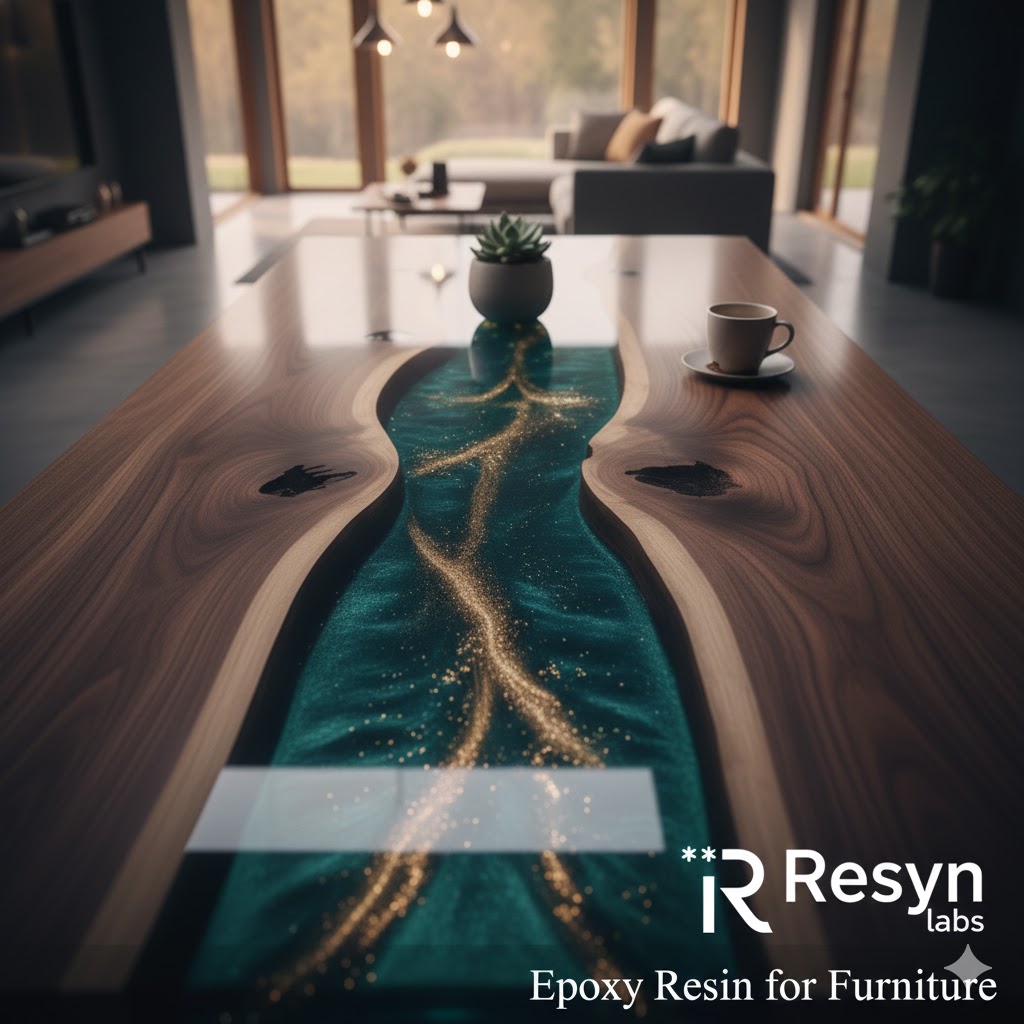

In the contemporary landscape of interior design, a revolution is occurring at the intersection of organic nature and synthetic brilliance. The use of Epoxy Resin For Furniture has evolved from a niche industrial application into a sophisticated medium for artistic expression. It is a material that defies the traditional boundaries of woodworking, allowing artisans to suspend time, light, and texture within a crystalline matrix.
To work with epoxy resin is to master the art of the “living finish.” It is a substance that begins as a liquid—viscous and full of potential—and transforms through a controlled chemical reaction into a solid that is as durable as stone yet as clear as the purest mountain water. This guide explores the technical mastery, aesthetic versatility, and structural advantages of integrating high-performance resins into modern furniture design.
The Chemistry of Art: Understanding Epoxy Resin for Furniture
At its core, epoxy resin for furniture is a two-part thermosetting polymer system consisting of a resin and a hardener. Unlike traditional varnishes that dry through the evaporation of solvents, epoxy cures through an exothermic chemical reaction. This process creates a cross-linked molecular structure that is incredibly dense, impact-resistant, and chemically stable.
The choice of resin is paramount to the success of a furniture project. Artisans must distinguish between “coating resins,” designed for thin, glass-like top layers, and “deep-pour resins,” which are formulated with a slower curing time to allow for the dissipation of heat in thick applications. Understanding this chemical dance is what separates a standard DIY project from a professional-grade heirloom piece.
The Aesthetic Frontier: Designing with Liquid Light
The most compelling aspect of resin is its ability to act as a bridge between disparate elements. It allows the furniture designer to use wood that was once considered “waste”—live-edge slabs with deep cracks, knots, or rot—and turn those imperfections into the focal point of the design.
The River Table Phenomenon
The “river table” remains the most iconic application of epoxy resin for furniture. By placing two live-edge slabs of timber parallel to one another and filling the void with tinted resin, designers create a visual narrative of water flowing through a canyon. The translucency of the resin can be manipulated to mimic the deep azure of the ocean, the emerald of a forest pool, or the stark clarity of ice.
Encapsulation and Suspension
Beyond the river table, resin offers the unique capability of encapsulation. From preserving delicate botanical specimens to suspending metallic pigments that shimmer like celestial nebulae, resin allows for a three-dimensional depth that no other medium can provide. When light hits a resin-embedded piece, it doesn’t just reflect off the surface; it penetrates the depth, illuminating the internal architecture of the furniture.
Technical Precision: The Pillars of a Flawless Finish
Creating high-end resin furniture is a game of millimeters and molecules. It requires a controlled environment and a disciplined approach to preparation.
Moisture Content Management: Wood is a hygroscopic material. For epoxy resin for furniture to bond permanently, the timber must be kiln-dried to a specific moisture percentage. Any residual moisture can cause the resin to foam or delaminate over time.
The Seal Coat: Before the main pour, the timber must be “primed” with a thin layer of resin to seal the pores. This prevents air bubbles from escaping the wood and becoming trapped in the final crystalline pour.
Thermal Regulation: Because epoxy generates its own heat (exothermic), the ambient temperature of the studio must be strictly regulated. If the pour gets too hot, the resin may yellow or crack; if it stays too cold, it may never reach its full hardness.
UV Stability: High-quality resins are formulated with HALS (Hindered Amine Light Stabilizers) to prevent the “yellowing” effect caused by long-term exposure to sunlight, ensuring the furniture remains pristine for decades.
Structural Superiority: Why Resin Outperforms Traditional Finishes
While the visual appeal is undeniable, the functional benefits of epoxy resin for furniture are equally impressive. Resin-integrated pieces are among the most resilient items in a luxury interior.
Unrivaled Durability
Once fully cured, professional-grade epoxy is incredibly hard. It resists scratches, heat, and water damage far better than traditional oil or wax finishes. For high-traffic areas like dining tables or kitchen islands, a resin surface provides a non-porous shield that is easy to sanitize and maintain.
Structural Reinforcement
In many designs, the resin is not merely decorative; it is structural. It acts as a permanent “liquid bridge” that bonds sections of wood together with a tensile strength that often exceeds the strength of the wood itself. This allows for daring, cantilevered designs and slender silhouettes that would be impossible with traditional joinery alone.
The Sustainable Edge: Giving New Life to Reclaimed Timber
In an era of conscious consumption, epoxy resin for furniture plays a vital role in sustainable design. It allows for the use of “salvaged” wood—trees that have fallen naturally or timber that has been reclaimed from old structures. Often, these pieces of wood have character-rich voids that would normally make them unsuitable for furniture. Resin fills these gaps, turning a piece of “scrap” into a high-value piece of functional art, thereby reducing the demand for virgin timber and celebrating the natural lifecycle of the forest.
Conclusion
The integration of resin into the world of furniture is more than a passing trend; it is the maturation of a new craft. It represents a harmony between the raw, unpredictable beauty of nature and the precision of modern material science. For the homeowner and the designer alike, resin offers a canvas of infinite possibilities—a way to capture a moment of fluid beauty and freeze it in time for generations to enjoy.
When you seek to push the boundaries of what furniture can be, you need a medium that matches your ambition. At Resyn Labs, we provide the high-performance formulations and the visionary expertise required to turn raw materials into crystalline masterpieces. We believe that every surface is an opportunity for brilliance, and every pour is a step toward the future of design.