
It’s strange what memories your brain decides to keep, and which to let go. For Me? A chat in the pub’s toilet. A friend pulled me aside after three pints and asked, “Be honest, do my teeth look bad when I smile?” I remember the door to the stall swinging, the tap dripping and me saying, ‘Not worse than your haircut’. He laughed, but not easily. There was a reason for the question. That pause you hear when someone has been thinking about fixing something for a while.
He made an appointment for six months of braces a few weeks later.
At the time, I didn’t know about them. Braces that promise to straighten your teeth in less than six months? It seemed like one of those things that people post about on Reddit that are too good to be true and then disappear from the internet.
But here’s the thing: they are real. And it’s becoming more and more common, especially for adults who can’t or won’t commit to years of metal on their teeth.
Here it is. A breakdown that isn’t fluffy. What braces for six months really are. What they do. What they don’t do. And what you’ll probably have to pay, without any fluff.
What Are Six Month Braces?
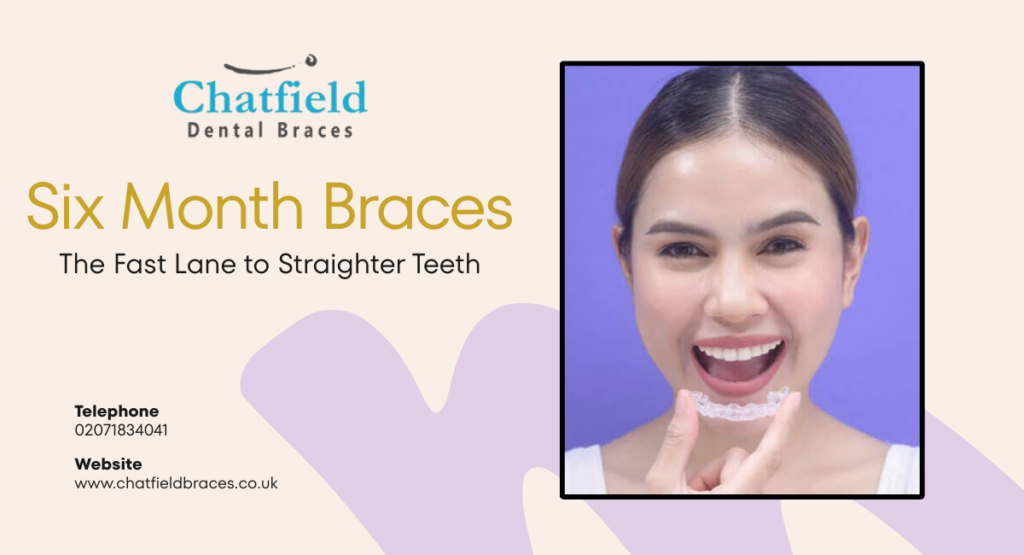
Even though the name sounds silly, it’s not a silly TikTok trend made up by a start-up in a lab on the other side of the world. Six month braces, also called 6 month braces or Six Month Smiles, are a type of short-term orthodontic treatment that focusses on straightening the teeth that people can see, like the front six to eight.
So, not a complete mouth makeover. This is just your social smile zone.
They use clear brackets and wires that match the colour of your teeth (so yes, they are somewhat discreet) and put gentle but steady pressure on them for about six months. Sometimes not at all. A little more sometimes. It depends on your teeth. The timeline isn’t set in stone.
And you can’t take them off, like aligners. You don’t put them in and take them out. You share a home with them. Brush around them. You should eat less toffee because you’re afraid one will pop off (it does happen).
How They Work — And Why They’re Fast
The reason six month braces work so quickly is that they don’t try to fix everything. Braces that are more traditional might help with your bite, jaw alignment, molar positioning, and more. These? Their main focus is on making the top front teeth look straight.
They speed up the process by narrowing the focus. It’s like getting ready for a sprint instead of a marathon. You’re not changing the whole bite system; you’re just making it easier to see when you smile or talk.
It’s a good choice for people who have had braces before (but things have changed) or whose crowding is mild to moderate. You’re not starting over. You’re changing course. In a quiet way.
The Pros: Why People Choose Six Month Braces
Speed. Obviously.
Six months go by quickly. It goes away in a blink. People in their 30s and 40s, especially those who work with clients or have social events coming up, don’t like making commitments for 18 months. They want results before the next wedding season, not after their child starts school.
Subtle Appearance
You don’t look like you just stole your teenage cousin’s braces. The clear brackets and white-coated wires go together surprisingly well, especially in pictures or when the light is soft. Close up? Yes, you can see them. But not too much.
Fixed = Consistent
You can’t “forget” to put them on. No mental load of keeping track of trays or taking them out for every snack. You brush, you floss (in a strange way), and you come in for your adjustments. Easy.
Targeted Goals
Six-month braces are a focused, effective way to fix crowding or spacing at the front, but not anything deeper. You don’t want to move your jawbone back into place. You’re straightening the teeth that people see in pictures. And that’s true.
The Cons: What They Don’t Tell You on Instagram
Not for Complex Cases
Let’s say your bite is really bad. Or your molars are moving around like tectonic plates. Or your lower jaw sticks out like a villain in a Bond movie. Braces for six months won’t fix your problem. They are made for fixing mild to moderate alignment problems, not deep structural problems.
If your case is more complicated, you might be told to get treatment for a longer time. Not a judgement, just mechanics.
Relapse Risk (If You Slack)
Braces change the position of teeth. Retainers hold them in place. If you don’t wear a retainer, your teeth will go back to how they were before, just like exes who “just want to catch up.” For a long time, you’ll probably have to wear retainers at night. There are no shortcuts there.
Limited Bite Correction
Again, these braces are about looks more than function. If you’ve got TMJ pain, grinding issues, or deep bite problems, these may not solve it. You’ll need a deeper dive with your orthodontist.
Initial Soreness
First week? Rough. Not too bad, but you’ll feel it. That dull ache that spreads through your jaw at night, pressure, and tightness. For the first 72 hours, I lived on lukewarm soup and quiet anger.
But like most pain, it goes away. You make changes. Your brain rewires itself. And chewing doesn’t feel like cheating anymore.
What’s the Catch Price-Wise?
This is where things get real. The six month braces cost in the UK varies a lot depending on the clinic, how complicated your case is, and whether you are getting both arches treated.
In general, six month smiles cost anywhere starting at £1,800 to £3,000, and sometimes even more. That’s for both the top and bottom arches. You might pay less if you’re only fixing one, but it depends. It’s always best to check with a clinic that specialises in this, like Chatfield Dental Braces.
And don’t forget to factor in retainers, consultations, follow-ups. Some clinics bundle it all. Others don’t. Ask, plainly, what the 6 month smile price includes—otherwise you’ll find yourself coughing up an extra £300 at the end for the thing that stops your teeth shifting back like stubborn furniture.
If you have other adult bills to pay, the 6 month smile cost might seem high. But if you’ve been feeling insecure for ten years or more, it’s a relief to finally do something for yourself.
Is It Worth It?
That’s a loaded question. Because “worth” doesn’t always land on spreadsheets.
But I’ll say this: if your teeth stop you from smiling or making full laughs, it’s not vain to change that. Six months isn’t a long time. A number of haircuts. A cycle of gym memberships. A long winter.
A friend of mine finished their 6 month braces treatment just in time for their sister’s wedding. She smiled properly for the first time in ages. The kind of smile where you don’t think about it, you just are it. That stuck with me too.
Wrapping Up — Without Wrapping it Up
If you’re not sure if it’s “worth it” or “too much trouble,” that should tell you something. You’ve been thinking about it. And most likely, the you from six months from now would have already dealt with it and moved on to something else.
That’s the quiet power of six month braces. Not that they change your face—but that they stop you thinking about it so much.
The treatment isn’t for everyone. But for the right candidate, at the right time, it’s fast, focused, and life-lightening in the oddest way.
Read Also: The Quiet Confidence That Comes After Composite Bonding