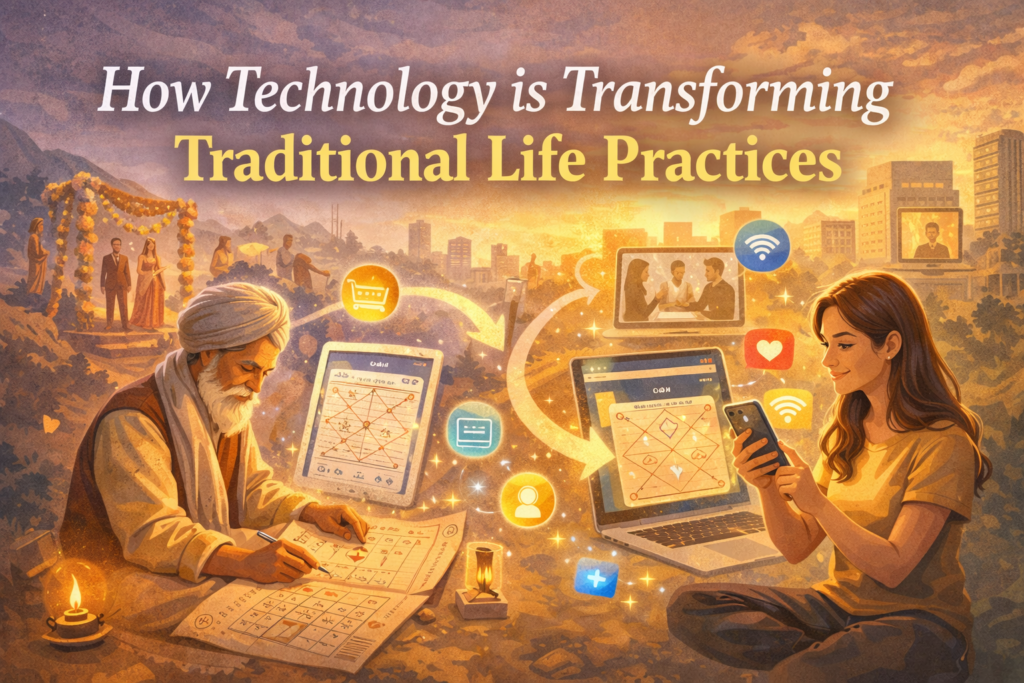

Technology keeps showing up in the wildest places. Nobody in 2005 was sitting around thinking, “Man, I really hope one day I can get my astrological chart analyzed while waiting for my chai to cool down.”
Yet here we are. Tech hasn’t just changed Netflix recommendations and food delivery. It’s reshaping practices that go back hundreds of years, stuff your grandparents did stuff the same way their grandparents did. And plot twist? It’s actually making traditions easier to follow, not wiping them out.
Traditions Evolve, They Don’t Vanish
There’s this panic that going digital equals cultural erasure. As the second something moves online, it loses all meaning and becomes fake.
But that’s not the reality. Take astrology, for example. Generations of people trekked across town, sat in cramped waiting rooms, and hoped the astrologer wasn’t having an off day. Now? You pull up a free kundli online at midnight in your pajamas. The tradition itself didn’t evaporate. It just stopped requiring a half-day commitment.
Religious practices, too. Virtual darshans, livestreamed prayers, app-based meditation guides. Sure, some folks think it’s sacrilege. But for someone stuck overseas missing Diwali back home, or an elderly person who can’t climb temple stairs anymore, it’s everything. Tech isn’t killing the practice. It’s extending the invite list.
Knowledge Stopped Being Exclusive
The biggest power shift tech caused? Information breakout.
Stuff that used to be locked behind specific teachers, regions, or family lineages is now searchable. Want to understand Vedic principles? Online courses exist. Curious what kundli milan actually checks for before marriage? You can learn it yourself instead of nodding along cluelessly while an elder explains.
This isn’t disrespectful. It’s empowering. People aren’t blindly accepting tradition anymore. They’re engaging with it, asking questions, and deciding what clicks for them personally.
Plus, traditions that were fading because nobody remembered the details? Now they’re archived. Uploaded. Passed down digitally to grandkids who live on three continents away and wouldn’t have learnt otherwise.
Planning Gets Less Chaotic
Tech stepped in like a calm friend with a clipboard. Digital RSVPs, budget spreadsheets, vendor chat groups, and livestreams for the uncle in Canada who couldn’t make it. Even matchmaking rituals like checking compatibility through kundli milan happen faster online, cutting weeks of back-and-forth into one afternoon.
The actual ceremonies? Still traditional. Still meaningful. But nobody’s losing their mind over forgotten phone numbers or misplaced guest lists anymore. The cultural weight stays. The logistical headache shrinks.
You Get to Explore on Your Terms
Here’s what’s underrated: tech makes tradition less intimidating.
Curious about your birth chart but too shy to ask someone face-to-face? Check your free kundli online. Take all the time you need. Compare perspectives. No pressure, no judgment, no awkward silences.
Want to learn Bharatanatyam, but the nearest teacher is two hours away? Online lessons work. Trying to nail your grandmother’s recipe, but she passed before teaching you? Step-by-step videos have your back.
It’s not about replacing human connection. It’s about removing barriers so more people can actually participate instead of feeling shut out.
Staying Connected Even When Far Apart
People say tech makes us lonely. That’s partly true. But it’s not the full picture.
Sure, being there in person is always better. But when you can’t be there, tech helps bridge that gap. People living abroad celebrate festivals together on video calls. Families in different countries are lighting lamps at the same time during online prayers. Groups online share how their region celebrates certain traditions and keep those memories alive.
It’s not perfect. But it’s much better than losing touch completely. For people who moved to other countries, those dealing with health issues, or anyone living far from family, tech is what keeps them connected to where they came from.
Young People Embracing Traditions Now
A lot of cultural practices were dying because younger generations saw them as outdated chores.
Then tech made them accessible in bite-sized, low-commitment ways. Stumble across an astrology meme, get curious, and pull up your chart for fun. Watch a reel about a festival ritual you never understood growing up. Suddenly, it’s not this heavy obligation. It’s just interesting content you engage with casually.
That casual engagement often sparks genuine interest. Turns out most people aren’t anti-tradition. They just needed an entry point that didn’t feel like homework or guilt trips from relatives.
“Real” Doesn’t Mean “Difficult”
People confuse convenience with inauthenticity. Like if something’s easy, it must be shallow.
But getting your kundli reading online doesn’t make it less legitimate than an in-person session. Attending a prayer service via stream doesn’t cheapen your faith. Learning traditional crafts through tutorials doesn’t make you less skilled.
Realness comes from intention, not difficulty. Tech just removes unnecessary friction. The meaning you bring to it? That’s what counts.
What’s Coming Next is Hybrid
Tech will keep evolving how traditions function. Purists will resist. Early adopters will go all in. Most people will mix and match based on what feels right.
And honestly, that’s healthy. Use tech where it helps. Stick to offline methods where they feel more meaningful. Build something that respects your heritage without suffocating under it.
Traditions exist to connect us to our past and guide us forward. If technology helps people maintain that connection, preserve important practices, and pass them along to kids who live wildly different lives, then it’s doing its job perfectly.