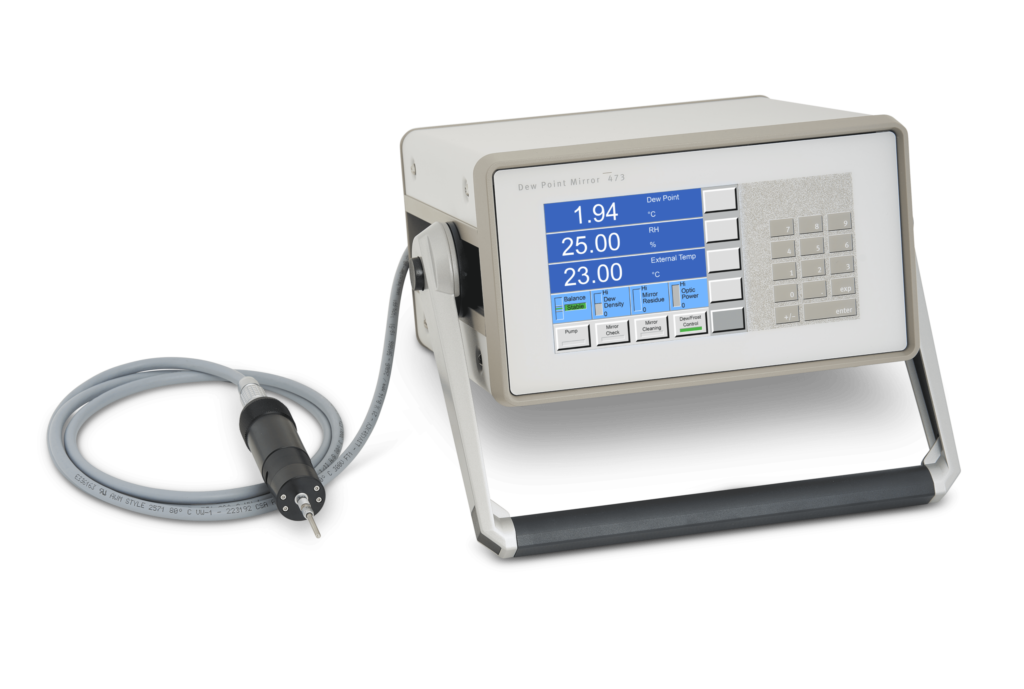

Humidity measurement plays a vital role in industrial processes, environmental monitoring, and laboratory-quality control. While there are many instruments designed to assess moisture content in air and gases, none match the accuracy and long-term stability of a chilled mirror hygrometer. Considered the primary standard for humidity measurement, chilled mirror hygrometers are used in aerospace, pharmaceuticals, calibration laboratories, cleanrooms, and high-tech manufacturing environments where every fraction of a degree in dew point matters. This article explores what a chilled mirror hygrometer is, how it works, its advantages, applications, and why it remains the benchmark for precision hygrometry worldwide.
What Is a Chilled Mirror Hygrometer?
A chilled mirror hygrometer is an advanced humidity-measuring instrument that determines dew point by cooling a temperature-controlled mirror until condensation forms on its surface. Because this process is based on fundamental thermodynamic principles rather than indirect electrical signals, the readings are exceptionally accurate and repeatable. In many industries, chilled mirror hygrometers serve as reference standards used to calibrate other humidity devices such as capacitive sensors, polymer RH probes, and dew point transmitters.
Unlike traditional hygrometers that rely on sensors prone to drift, the chilled mirror technique physically detects the presence of moisture by observing condensation, which makes the measurement both direct and traceable to international metrological standards. This traceability is a major reason why chilled mirror hygrometers are widely used in national laboratories and high-precision industrial settings.
How a Chilled Mirror Hygrometer Works
The working principle of a chilled mirror hygrometer is based on cooling a highly polished mirror until dew or frost begins to form. The process involves several key components working in harmony:
1. Temperature-Controlled Mirror
The mirror is typically made from a reflective, thermally stable material such as metal or sapphire. Its surface is polished to perfection so that light reflection changes can be detected accurately when moisture forms.
2. Thermoelectric Cooler (Peltier Element)
This device cools the mirror quickly and precisely. As the mirror cools, it reaches the dew point—the temperature at which the water vapour in the gas condenses.
3. Optical Detection System
A beam of light shines onto the mirror. When condensation forms, the reflectivity changes. Photodetectors sense this change, allowing the system to determine the exact point at which dew (or frost) appears.
4. Control Electronics
The hygrometer adjusts cooling and heating continuously to maintain a thin, stable layer of condensation. This equilibrium ensures the reading is extremely precise.
5. Temperature Sensor
A high-accuracy thermometer embedded in the mirror measures the temperature at the exact moment condensation occurs.
This direct measurement of dew point is far superior to approximations made by capacitive, resistive, or infrared sensors.
Why Chilled Mirror Hygrometers Are Considered the Most Accurate
There are several reasons chilled mirror instruments are the gold standard in humidity measurement:
1. Direct Measurement
Instead of estimating humidity indirectly, chilled mirror hygrometers detect dew point through physical condensation. This makes them inherently accurate and traceable.
2. Minimal Drift
Traditional humidity sensors degrade over time due to contamination, ageing, or chemical exposure. Chilled mirror systems experience little sensor drift, especially when well-maintained.
3. High Precision
Chilled mirror hygrometers can detect dew point changes as small as ±0.1°C or better, making them suitable for laboratory-grade applications.
4. Wide Operating Range
These devices can measure dew points from deep moisture-free conditions (–80°C dew point or lower) to high humidity environments.
5. Excellent Repeatability
Their measurements remain stable even after years of use, which is crucial for industrial process control and calibration services.
Because of these advantages, organisations that depend on accuracy—such as aerospace manufacturers, semiconductor fabrication plants, and pharmaceutical companies—trust chilled mirror technology above all others.
Applications of Chilled Mirror Hygrometers
Chilled mirror hygrometers are used across an expansive range of industries due to their unmatched precision. Some of the major applications include:
1. Calibration Laboratories
National standards labs and accredited calibration facilities use chilled mirror hygrometers as reference standards for calibrating dew point sensors, RH probes, and moisture analysers.
2. Pharmaceutical Manufacturing
Humidity levels must remain tightly controlled in drug formulation, tablet manufacturing, and cleanroom environments. Chilled mirror hygrometers ensure compliance with strict GMP and FDA guidelines.
3. Semiconductor Industry
Microchips and electronics are extremely sensitive to moisture contamination. Precise humidity monitoring prevents oxidation and defects during production.
4. Aerospace & Defence
Aerospace components require ultra-dry environments to avoid corrosion and maintain material stability. Chilled mirror instruments verify the accuracy of aerospace-grade moisture systems.
5. Compressed Air & Gas Monitoring
Industrial gases such as nitrogen, hydrogen, oxygen, and natural gas require precise moisture control. Chilled mirror hygrometers measure dew points in pipelines and dryers.
6. HVAC, Cleanrooms & Environmental Testing
Maintaining strict humidity levels is essential for research laboratories, museums, archives, and environmental chambers.
Chilled Mirror vs Other Humidity Measurement Technologies
Understanding how chilled mirror hygrometers compare to other technologies helps highlight their unique advantages.
Chilled Mirror vs Capacitive Sensors
- Capacitive sensors are low-cost and compact but prone to drift.
- Chilled mirror systems are more accurate and stable.
- Capacitive sensors are suitable for everyday HVAC use, while chilled mirrors are best for critical applications.
Chilled Mirror vs Resistive Hygrometers
- Resistive types degrade quickly in contaminated environments.
- Chilled mirror instruments maintain accuracy even in challenging conditions when paired with good filtration.
Chilled Mirror vs Dew Point Transmitters
- Dew point transmitters are ideal for real-time process monitoring.
- Chilled mirror hygrometers serve as calibration references for transmitters.
- Both devices complement each other in industrial setups.
In summary, no other humidity measurement method matches chilled mirror accuracy.
Maintenance and Care
Although chilled mirror hygrometers are extremely stable, they do require proper maintenance:
- Regular mirror cleaning helps prevent contamination from oils, dust, or airborne particles.
- Good sample filtration ensures the mirror only contacts clean gases.
- Scheduled calibration checks maintain traceability.
- Avoiding corrosive or reactive gases prolongs equipment life.
With proper care, these instruments can maintain accuracy for many years.
Choosing the Right Chilled Mirror Hygrometer
When selecting a chilled mirror hygrometer, consider:
- Dew point measurement range
- Accuracy and stability
- Mirror material (metal vs sapphire)
- Cooling power (single- or multi-stage Peltier)
- Portability (portable vs laboratory models)
- Data logging and connectivity
- Response time
- Maintenance requirements
High-end brands often offer custom configurations tailored for laboratories, industrial pipelines, and calibration facilities.
Conclusion
A chilled mirror hygrometer remains the most accurate instrument for humidity and dew point measurement. Its direct physical measurement method, exceptional stability, and traceability to international standards make it indispensable in industries where precision matters most. From pharmaceutical cleanrooms to gas pipelines and calibration labs, chilled mirror technology provides the reliability and confidence required for high-level humidity monitoring.