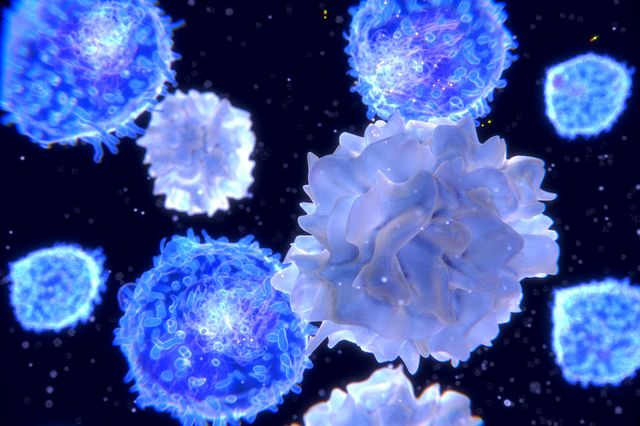

Cytokine quantification through precise cytokine assay methods reveals critical immune signaling patterns. These small proteins regulate inflammation, activate immune cells, and support tissue repair. These processes are important for making vaccines work well and ensuring they are safe for treatment. Accurate measurement supports regulatory-compliant bioanalysis across preclinical and clinical phases.
Cytokine Assays in Vaccine Development
Cytokine assays enable detailed profiling of vaccine-induced immune responses. Th1 cytokines, such as interferon-gamma (IFN-γ) and interleukin-12 (IL-12), indicate cellular immunity, which is crucial for viral pathogen clearance. Th2 cytokines, including IL-4 and IL-5, correlate with antibody production and humoral responses.
Vaccine developers employ multiplex Cytokine Assays to assess balanced immune profiles. Elevated pro-inflammatory cytokines, such as tumor necrosis factor-alpha (TNF-α) and IL-6, signal robust innate activation, while regulatory cytokines, such as IL-10, prevent excessive inflammation. These measurements guide adjuvant selection and dose optimization under GLP-compliant conditions.
Longitudinal cytokine assay monitoring tracks response durability. Persistent IFN-γ production post-vaccination predicts long-term protection against intracellular pathogens. Regulatory agencies require such data to validate correlates of protection for licensure.
Role in Drug Development Bioanalysis
Drug candidates interact with cytokine networks, necessitating comprehensive cytokine assay evaluation. Pharmacodynamic studies quantify target engagement through downstream cytokine modulation. For immunomodulatory therapies, baseline and post-dose cytokine levels provide proof of mechanism.
Cytokine assays detect the risk of cytokine release syndrome during early development. Elevated IL-6, IL-1β, and monocyte chemoattractant protein-1 (MCP-1) levels prompt mitigation strategies. In oncology trials, increased IL-2 and IL-15 support T-cell expansion efficacy.
Therapeutic monoclonal antibodies targeting cytokines demand rigorous cytokine assay validation. Free and bound cytokine measurements distinguish pharmacologic blockade from endogenous suppression. GLP-compliant assays ensure data integrity for Investigational New Drug applications.
Primary Cytokine Assay Technologies
Enzyme-linked immunosorbent assay (ELISA) provides a sensitive single-analyte cytokine assay. Sandwich formats capture cytokines between specific antibodies, with colorimetric or chemiluminescent detection achieving picogram-per-milliliter limits. High specificity suits regulatory submissions despite limited multiplexing.
Multiplex bead-based cytokine assays enable simultaneous analysis of 10-50 cytokines from minimal sample volumes. Flow cytometry or electrochemiluminescence platforms distinguish analytes via bead fluorescence signatures or spatial arrays. These assays conserve precious clinical samples while generating comprehensive cytokine signatures.
Electrochemiluminescent platforms offer superior dynamic range for cytokine assay applications. SULFO-TAG detection minimizes matrix effects in serum and plasma, supporting pharmacokinetic/pharmacodynamic correlation studies. Automated workflows enhance reproducibility across study sites.
Real-time quantitative PCR complements protein-based cytokine assays by measuring mRNA transcripts. Single-cell microfluidic PCR reveals heterogeneous cytokine expression patterns within immune populations. Transcriptional data predicts protein secretion dynamics during early drug screening.
Must Read: Pharmacokinetics Assay in Drug Discovery and Development
Sample Preparation and Matrix Considerations
Biological matrices challenge cytokine assay performance. Serum heterophilic antibodies and soluble receptors interfere with detection. Protein precipitation or heterophilic blocking reagents mitigate these effects while preserving analyte recovery.
Plasma anticoagulants influence baseline cytokine levels. EDTA tubes minimize platelet activation compared to heparin, reducing artifactual IL-6 elevation. Centrifugation protocols remove cellular contaminants that confound bead-based cytokine assays.
Freeze-thaw stability varies by cytokine. IL-2 withstands multiple cycles; TNF-α degrades rapidly. Single-use aliquoting at -80°C preserves sample integrity for longitudinal cytokine assay analysis. Protease inhibitors stabilize labile analytes during processing.
Regulatory Compliance in Cytokine Quantification
Good Laboratory Practice governs cytokine assay validation for pivotal studies. FDA and ICH guidelines mandate demonstrations of accuracy, precision, selectivity, and stability across relevant matrices. Full validation supports Phase II/III data packages.
Selectivity testing distinguishes target cytokines from structural analogs. Recovery experiments quantify matrix effects. Parallelism assessments ensure proportional dilution responses. Stability data cover bench-top, freeze-thaw, and long-term storage conditions.
Multiplex cytokine assay validation addresses cross-reactivity risks. Individual analyte performance mirrors single-plex formats. Data cutoff criteria prevent over-interpretation of low-level signals. Quality control samples spanning the reportable range verify the acceptability of the run.
Method Selection Criteria
Assay choice balances sensitivity, throughput, and cost. Single-analyte ELISAs excel for regulatory filing cytokines. Multiplex platforms accelerate hypothesis generation during discovery. Sample volume dictates feasibility; 25 microliters suffice for bead arrays, whereas 100 microliters are required for traditional ELISA Assays.
Dynamic range requirements favor electrochemiluminescence over colorimetric detection. Clinical samples span a 5-log concentration range; narrow-range assays require dilutions, introducing error propagation. Instrument availability influences platform adoption in contract research organizations.
Throughput demands favor automation-compatible cytokine assays. 96-well formats support hundreds of samples daily. High-content screening employs 384-well configurations for lead optimization. Custom assay development optimizes performance for novel biomarkers.
Analytical Validation Parameters
Precision studies establish intra- and inter-assay variability below 20% coefficient of variation. Accuracy recovers spiked analytes within 80-120% nominal values. The lower limit of quantification achieves functional sensitivity for disease-relevant concentrations.
Selectivity matrices include individual donors, lipemic, and hemolyzed samples. No-analyte controls confirm the absence of signals exceeding noise thresholds. Hook effect testing prevents signal saturation at high concentrations.
Stability assessments simulate real-world handling. Cytokines demonstrate stability through three freeze-thaw cycles and 24 hours of bench processing. Long-term data support 24-month storage at -70°C.
Conclusion
Cytokine quantification via validated cytokine assays provides indispensable immune profiling data throughout vaccine and drug development. Precise measurement of pro- and anti-inflammatory signatures informs safety, efficacy, and mechanism-of-action decisions. Regulatory-compliant multiplexing enhances efficiency while maintaining data integrity. Ongoing platform innovations promise expanded biomarker panels supporting accelerated therapeutic advancement. Strong cytokine analysis remains foundational for developing safe, effective biologics meeting stringent approval standards.