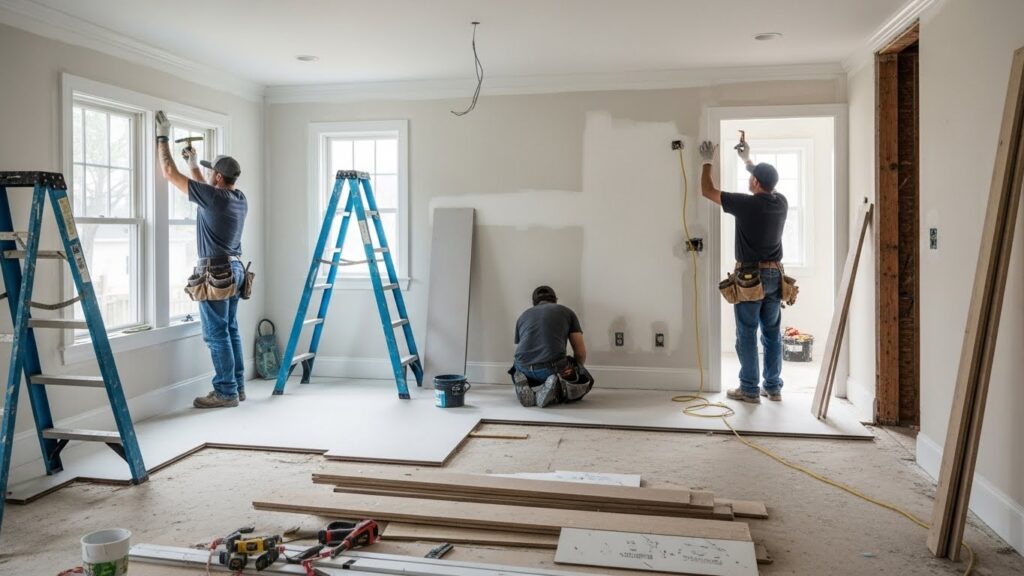

In the U.S., the typical house upgrade expense is between $19,000 and $88,000. The price may vary from $15 to $150 per square foot, depending on the project’s size, chosen materials, and location. Minor cosmetic changes may be less than $10,000, while extensive remodels might be more than $200,000.
Understanding What “Upgrading A House” Means
Upgrading a home might be a simple idea such as repainting the walls and replacing the light fixtures or a complex one involving tearing down walls and adding modern amenities. It is a way to have an older property appeal to the modern generation, increase its comfort, and enhance its resale value.
Whereas, in the U.S., a great number of homeowners undertake home upgrade projects not only for beautification purposes, but also for energy-saving, better insulation, new windows, or an updated HVAC system can drastically lower utility bills. Regardless of whether you are upgrading a 1960s ranch or a newly built house in the suburbs, knowing what affects the cost will help you to make a better plan and prevent surprises when it comes to your budget.
Average Home Upgrade Costs In 2025
It cost to upgrade a home is mainly determined by the size in square footage, the choice of materials, and the extent of the renovation. Based on the data from Angi, Rocket Mortgage, and This Old House, here is the expected home upgrade budget of U.S. homeowners:
| Project Scope | Estimated Cost Range (USD) | Cost per Sq. Ft. | Description |
| Cosmetic upgrades (paint, fixtures) | $5,000 – $15,000 | $15 – $40 | Simple interior refreshes, no structural changes |
| Mid-range renovation (kitchen, bath) | $20,000 – $60,000 | $50 – $100 | Updating key rooms with moderate materials |
| Full-house remodel | $100,000 – $300,000+ | $100 – $200+ | Structural, electrical, plumbing, and design overhaul |
| Luxury remodel | $250,000 – $500,000+ | $150 – $300+ | Custom finishes, smart home tech, high-end materials |
These stats reflect the national averages, and the cost in big metros like New York, San Francisco, or Seattle may be 30-60% more than the stated prices because of labor and permit expenses.
How to Calculate Costs Correctly
It is strongly recommended for every homeowner to obtain a construction quantity takeoff prior to a major remodel. A takeoff is a professional estimation that physically measures the amount and cost of the materials to be ordered (such as lumber, flooring, or paint) before a project starts.
Relying on a thorough takeoff is one of the surest ways to avoid budget underestimations as is the case with most renovation projects. This is why the contractors use it for their planning in placing orders, reducing waste, and devising the work schedule that is achievable. The benefits of this procedure are not limited to large-scale projects only but also to the small ones, like a kitchen renovation or new flooring, where the outcome is still clear and money-saving.
Reasons For The Wide Cost Differences
The costs of home improvements vary extensively because those of which houses, the latter being their renovations, are never the same. The type of project, the home age, the regional labor rates, and even the materials may influence the final price.
Home Age And Condition
For example, an old house can bring you the extra expenses on the upgraded plumbing, the upgraded wiring, or even foundation strengthening, whereas a new one is already supplied with modern necessities. So, this additional work can easily take the money of the budget to the thousands range.
Location
Improving a house in states like California or Massachusetts can cost double or even triple than that of doing it in the Midwest or the South. The labor and permit fees are usually the two big spenders that cause variations in the regions.
Material And Finish Quality
For instance, the cost of laminate flooring is around $2-$5 per square foot, while the price of a solid oak or marble floor can go beyond $15-$25 per square foot. Similarly, the basic fixture may be $200, whereas a branded designer fixture may cost thousands of dollars.
Typical Upgrade Categories And What They Cost

1. Cosmetic And Surface Upgrades
These are the least complicated and quickest projects – repainting, refinishing cabinets, upgrading light fixtures, or changing flooring.
Average cost: $2,000–$10,000 Timeline: 1-3 weeks Best for: Homes structurally sound but outdated in design.
A simple paint refresh may deliver a substantial return of investment (ROI) – new colors frequently give the impression of a bigger and newer house.
2. Kitchen Renovations
Kitchen remodels are usually the most costly and the most lucrative projects. A complete kitchen transformation (new cabinets, appliances, flooring, and countertops) generally costs $25,000–$60,000.
Luxury kitchens with custom cabinetry or quartz countertops can go beyond $100,000. Nevertheless, a medium-range remodel is likely to yield a 60–80% ROI upon selling.
| Kitchen Upgrade Type | Cost Range | Typical ROI |
| Minor refresh (paint, backsplash, hardware) | $5,000–$15,000 | 70–85% |
| Mid-range renovation | $20,000–$45,000 | 75–80% |
| Luxury remodel | $60,000–$120,000+ | 60–70% |
3. Bathroom Remodels
After kitchens, bathrooms are the most popular remodeling projects. A small bathroom remodel will cost you about $8,000–$15,000, whereas a luxury master bath may go beyond the $40,000–$60,000 mark without much difficulty.
Some of the latest upgrades are walk-in showers, intelligent toilets, and double vanities, which are all comfortable and attractive to buyers.
4. Structural And Whole-House Renovations
It will cost you between $100,000 and $300,000+ if your house is reconfigured for rooms, new walls, foundation repairs, or additions.
These undertakings normally involve architects, engineers, and city permits. Although pricey, they have the power to totally change a stale house into a brand new one.
5. Energy-Efficient And Smart Upgrades
Choosing sustainability is becoming a trend among Americans. The installation of solar panels, energy-efficient windows, or a smart thermostat system not only saves money on the utility bills but also makes the house more attractive to eco-conscious buyers.
Average cost: $5,000–$25,000 Potential savings: Up to 30% on utility bills annually
6. Outdoor And Curb Appeal Improvements
The outside look of the house is very important if the owner plans to sell it. Painting the exterior, landscaping, driveway upgrades, or new siding can turn around the first impression in a big way.
| Upgrade Type | Typical Cost (USD) | Expected Value Increase |
| New siding (vinyl, fiber cement) | $12,000–$20,000 | 60–70% ROI |
| Front entry door replacement | $2,000–$3,000 | 90% ROI |
| Landscaping & lighting | $3,000–$8,000 | 50–60% ROI |
| New roof installation | $10,000–$25,000 | 55–65% ROI |
Hidden Costs Many Homeowners Forget
Enhancements seldom work out precisely as expected. These are the ignored expenses in most cases:
- Permits and inspections: $500–$5,000, depending on the size and location of a project.
- Design fees: The charge of 5-15% of the total budget, is the Interior designers or architects fee.
- Waste removal: Dumpster rentals and cleanup can add $500–$1,000.
- Temporary housing: Short-term rentals that add to the total if you cannot stay in your home during renovations.
Infact, one should always keep a buffer of an additional 10-20% of the total budget as a contingency fund to cater for the unforeseen issues like mold, outdated wiring, or plumbing leaks.
Budgeting Smartly For A Home Upgrade
A well thought out plan before you start works out cheaper and less stressful. You should first decide your priorities by listing what has to be fixed and what you would like to be improved.
After that, get contractor quotes from 3-5 different workers and not only compare the prices but also their experiences and whether they provide a warranty or not. Carefully check their quantity takeoff reports to confirm that the estimates for materials and labor are accurate.
If you don’t have enough money, you can think about upgrading in phases – first, places with a high impact like kitchens or bathrooms and then moving to aesthetic touches.
Return On Investment (Roi): What’s Worth It
Resale value will not increase as a result of certain upgrading, however, some will give you great returns:
| Project | Average ROI |
| Kitchen remodel | 75–80% |
| Bathroom remodel | 70–78% |
| New siding | 68–72% |
| Energy-efficient windows | 65–70% |
| Curb appeal landscaping | 60–65% |
A good rule of thumb is to spend proportionally to the value of your home. Let’s say your home is worth $300,000, in that case, you should keep your kitchen upgrade under $60,000 so as not to over-improve for your neighborhood.
Timeline: How Long Upgrades Usually Take
Project Type
Typical Duration
Cosmetic upgrades
1–3 weeks
Kitchen or bathroom remodel
4–8 weeks
Full home renovation
3–6 months
Major addition or rebuild
6–12 months
Delays are mostly related to permits, weather, or material shortages, therefore, it is crucial to be flexible.
Common Mistakes To Avoid
- Starting without a plan or permit: Results in spending more than planned and facing legal troubles.
- Choosing cheap materials: Saves money only at the beginning and then increases the costs of maintenance.
- Ignoring professional input: Designers and contractors can save money by avoiding costly mistakes.
- Skipping detailed estimates: If you don’t have a quantity takeoff, the hidden costs can increase rapidly.
Final Thoughts
Upgrading a house in 2025 is not just a design decision – it’s a financial strategy. Investing $5,000 or $150,000, being aware of where your money goes will make sure each dollar works for you in terms of comfort, efficiency, and value.
By planning, employing a quantity takeoff, and concentrating on the areas that give the most return, homeowners in the U.S. have the opportunity to remodel their homes while still being able to control their expenses. A successful renovation not only revitalizes your home but also makes it a sound investment for the future.
FAQs
Q1. How Much Should I Budget Per Square Foot For House Upgrades?
Between $15 and $60 for basic remodels; $100-$150+ for full luxury upgrades.
Q2. What’s The Cheapest Way To Upgrade A House?
Focus on paint, lighting, new hardware, and minor décor updates.
Q3. How Can I Avoid Budget Overruns?
Include a contingency (10-20%), get fixed-price quotes, and avoid mid-project design changes.
Q4. Do Upgrades Always Increase Home Value?
Not always. Only well-planned, quality upgrades (kitchen, bath, curb appeal) give strong ROI.
Q5. Which Upgrades Give The Best Return On Investment?
Kitchen remodels, energy-efficient windows, new roof, and exterior paint are top performers.
Q6. Are Renovation Costs Different By Country?
Yes. Labor and material costs can vary by 50-70% between countries.