
You have a stunning piece of artwork—a company logo, a custom graphic, or a piece of original art. It looks perfect on screen and in print. But when you try to turn it into an embroidery file, the result can be disappointing. The design might pucker, details get lost, or the colors look muddy. This common frustration highlights a crucial truth: embroidery is a different language. Translating a visual design into a perfect stitch file requires a specialized skill set possessed by professional embroidery digitizers.
The Initial Consultation: More Than Just a File Transfer
The process never begins with software. It starts with a conversation. Professional digitizers are problem-solvers, not just file processors. Before they even look at your artwork, they ask important questions. What type of fabric will be used? A design for a stiff canvas cap needs a completely different approach than one for a stretchy polo shirt.
What is the final size of the embroidery? Intricate details that look great on a large jacket back can become a tangled mess when stitched small on a cuff. They will also discuss the desired look—is a bold, textured effect wanted, or a smooth, flat finish? This initial consultation is the foundation for the entire project, allowing the digitizer to create a strategy before a single stitch is programmed.
The Art of Deconstruction: Seeing Stitches, Not Shapes
When a professional looks at your artwork, they do not just see a logo; they see a puzzle of potential stitches. Their first step is to deconstruct the design into its core components. They identify which elements should be satin stitches, which should be fill stitches, and how these layers will interact.
They look for potential trouble spots—tiny text, subtle gradients, or extremely thin lines that won’t translate well into thread. This analytical phase is where the digitizer makes critical decisions about how to simplify and strengthen the design for the embroidery process, ensuring the final product is both beautiful and technically sound.
Building the Foundation: The Critical Role of Underlay
Beneath every professional embroidery design lies its hidden skeleton: the underlay. This is one of the key areas where amateur digitizing fails and professional work shines. Underlay is a series of foundational stitches sewn before the top stitches. It has several vital jobs.
A edge run underlay outlines shapes to prevent fabric fraying and create a sharp boundary. A zigzag or fill underlay stabilizes larger areas, preventing the fabric from puckering. The digitizer carefully selects the type, density, and direction of the underlay based on the fabric and design. This invisible framework is what ensures the design lies flat, looks crisp, and stands up to wear and washing.
Stitch Engineering: Pathing, Density, and Pull Compensation
A professional digitizer is an engineer of thread. They meticulously plan the stitch path—the order in which the needle moves to create the design. A logical path minimizes thread jumps and trims, which reduces the chance of thread breaks and creates a cleaner back.
They also master stitch density—how closely together the stitches are packed. Too dense, and the design becomes stiff and prone to puckering. Too loose, and the fabric shows through. Furthermore, they use pull compensation, a technique that slightly widens shapes to account for the natural pull of the stitches, ensuring no gaps appear between adjacent elements.
The Human Touch Versus Automated Software
It is tempting to think that auto-digitizing software can do this job. While these tools have their place for simple designs, they lack the nuanced judgment of a human expert. A computer program cannot understand how a specific knit fabric will behave or how to create the illusion of texture in an animal’s fur.
Professional digitizers make artistic decisions that software cannot. They adjust stitch angles to create visual interest and texture. They strategically break large areas into segments to prevent puckering. They understand how different thread types interact with various materials. This human touch is what transforms a generic file into a custom-crafted blueprint for a perfect stitch-out.
The Non-Negotiable Test Stitch-Out
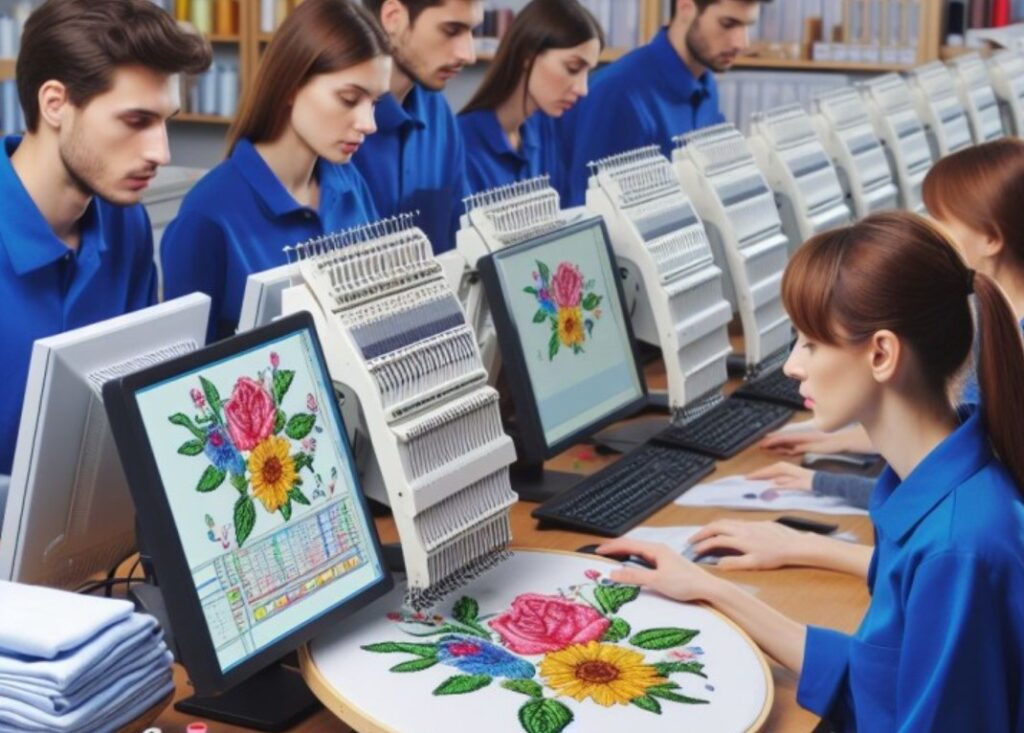
No professional considers a file complete when it is saved on the computer. The ultimate test happens at the embroidery machine. They always run a test stitch-out on the actual fabric that will be used for the final project.
They watch the machine as it runs, looking for any issues. They feel the finished sample to check the density and texture. This practical test provides invaluable feedback. If something is not perfect, they return to the software, make micro-adjustments, and create a revised version. This cycle of testing and refining is what guarantees a flawless result.
The work of professional embroidery digitizers is a unique blend of technical precision and artistic vision. They are the vital translators between the world of visual design and the physical reality of thread and fabric. By deconstructing artwork, engineering robust stitch paths, building strong foundations with underlay, and committing to rigorous testing, they ensure that every design stitches out with clarity, durability, and visual impact. Investing in their expertise is not just buying a file—it is guaranteeing that your artwork becomes a perfect embroidered reality, every single time.