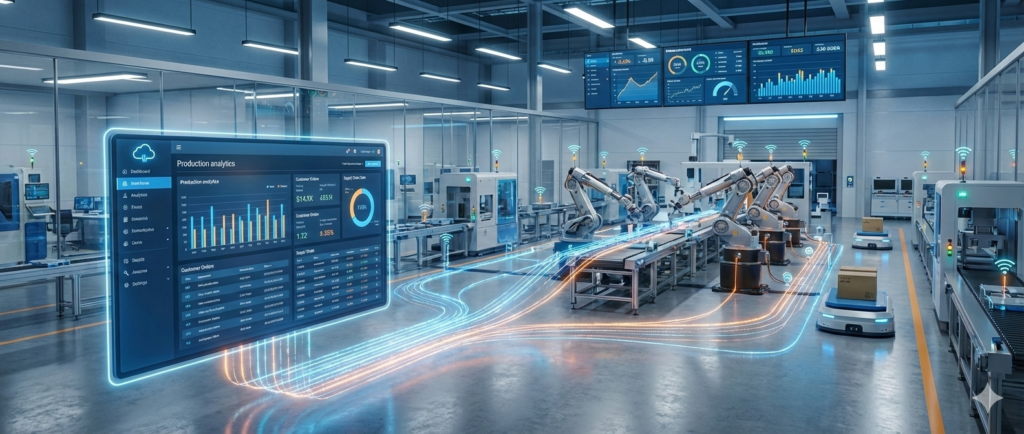

Manufacturing organizations are under constant pressure to improve efficiency, reduce costs, and meet rising customer expectations. Global competition, supply chain volatility, and demand for customization have transformed how manufacturers operate. In this environment, traditional customer relationship management systems are no longer sufficient.
Modern manufacturing CRMs extend far beyond sales tracking. They connect customer demand with production planning, inventory, and delivery timelines. When aligned correctly, CRMs become a strategic bridge between front-office engagement and back-end operations.
As manufacturers modernize their digital ecosystems, many collaborate with Salesforce ERP Integration Companies to align CRM platforms with production systems and enterprise workflows. This alignment enables tighter coordination between customer data and shop-floor automation. As a result, manufacturers gain visibility, responsiveness, and operational control across the entire value chain.
This article explores how manufacturing CRMs integrate with shop-floor automation. It examines benefits, use cases, challenges, and future trends shaping connected manufacturing environments.
The Evolution of CRM in Manufacturing
Manufacturing CRMs have evolved significantly over the past decade. Initially, they focused on managing leads, accounts, and sales pipelines. However, manufacturing complexity demanded deeper functionality.
Today’s CRMs integrate with engineering, production, logistics, and service systems. They support configure-to-order processes, long sales cycles, and multi-stakeholder relationships.
This evolution reflects the need for real-time coordination between customer expectations and manufacturing capabilities.
Understanding Shop-Floor Automation
Shop-floor automation refers to the use of machines, sensors, robotics, and software to control manufacturing processes. Automation improves speed, accuracy, and consistency in production.
Systems such as Manufacturing Execution Systems, Industrial IoT platforms, and robotics controllers drive automation. These systems generate vast amounts of operational data.
When integrated with CRM platforms, this data creates a powerful feedback loop between production and customer engagement.
Why CRM and Shop-Floor Integration Matters
Disconnected systems create operational blind spots. Sales teams may promise delivery dates without real-time production insights. Production teams may lack visibility into demand changes.
Integrating CRM with shop-floor automation eliminates these gaps. Customer demand flows directly into production planning systems.
This integration improves accuracy, reduces delays, and strengthens customer trust.
Key Benefits of Manufacturing CRMs Integrated with Automation
Real-Time Demand Visibility
Integrated CRMs provide real-time visibility into customer orders. Shop-floor systems receive updated demand signals instantly.
Production schedules adjust dynamically based on CRM data. Manufacturers respond faster to changes.
This responsiveness reduces lead times and improves on-time delivery performance.
Improved Production Planning and Scheduling
CRM integration enhances production planning accuracy. Sales forecasts align with actual customer behavior.
Automation systems receive reliable input data. Scheduling becomes more predictable and efficient.
Better planning reduces overtime, waste, and inventory costs.
Enhanced Customer Experience
Customers expect transparency and reliability. Integrated CRMs provide accurate order status and delivery updates.
Customer service teams access real-time production data. They respond confidently to inquiries.
This transparency builds trust and long-term customer relationships.
CRM Integration with Manufacturing Execution Systems
Manufacturing Execution Systems control and monitor shop-floor operations. Integrating MES with CRM platforms creates end-to-end visibility.
CRM data informs production priorities. MES feedback updates order status automatically.
This bidirectional integration ensures alignment between customer commitments and operational realities.
Manufacturers gain greater control over execution and communication.
Role of IoT and Sensors in CRM-Driven Manufacturing
Industrial IoT devices collect data from machines and production lines. Sensors track performance, quality, and downtime.
When integrated with CRM platforms, IoT data enhances customer insights. For example, equipment usage data informs service scheduling.
Predictive maintenance alerts trigger CRM workflows. Service teams engage proactively.
IoT-driven integration improves efficiency and customer satisfaction.
Supporting Configure-to-Order and Custom Manufacturing
Many manufacturers offer customized products. Configure-to-order processes require precise coordination.
CRMs capture customer specifications accurately. These specifications flow into production systems automatically.
Automation ensures configurations are manufactured correctly. Errors and rework decrease.
CRM integration supports scalability for customized manufacturing models.
CRM and Automation in After-Sales Service
After-sales service represents a significant revenue opportunity. Integrated CRMs support service contract management and field service operations.
Automation systems provide usage and performance data. CRM platforms use this data to trigger service workflows.
Service teams address issues before failures occur. Customer downtime reduces significantly.
Proactive service strengthens customer loyalty.
Data Analytics and Reporting Across CRM and Shop Floor
Integrated data enables advanced analytics. Manufacturers analyze sales trends alongside production performance.
Dashboards combine CRM metrics with shop-floor KPIs. Leaders gain comprehensive insights.
Data-driven decisions improve forecasting, quality control, and resource allocation.
Analytics transforms data into strategic advantage.
Challenges in Integrating Manufacturing CRMs and Automation
Despite benefits, challenges exist. Legacy manufacturing systems may lack modern integration capabilities.
Data standardization presents difficulties. Different systems use varied formats and protocols.
Security concerns also arise. Exposing shop-floor systems requires robust safeguards.
Change management remains critical. Teams must adapt to integrated workflows.
Best Practices for Successful CRM and Automation Integration
Start with clear business objectives. Identify processes requiring real-time integration.
Adopt standardized APIs and middleware solutions. These simplify connectivity across systems.
Engage cross-functional teams early. Collaboration ensures alignment between IT, operations, and sales.
Test integrations thoroughly. Reliability is essential for production environments.
Real-World Example of CRM and Shop-Floor Integration
Consider a mid-sized industrial manufacturer facing delivery delays. Sales commitments often conflicted with production capacity.
The company integrated its CRM with MES and IoT platforms. Demand data flowed directly into production planning.
Delivery accuracy improved significantly. Customer satisfaction increased.
Integration transformed operations and customer engagement.
Future Trends in Manufacturing CRMs and Automation
Manufacturing CRMs will continue evolving. Deeper integration with AI and machine learning will enhance forecasting.
Digital twins will connect CRM data with virtual production models. Scenario planning will improve.
Edge computing will support real-time decision-making on the shop floor.
Future-ready manufacturers will prioritize connected CRM ecosystems.
Conclusion
Manufacturing CRMs integrated with shop-floor automation deliver significant value. They align customer demand with operational execution.
By connecting CRM platforms with automation systems, manufacturers improve efficiency, transparency, and responsiveness. Customer experience and operational performance improve simultaneously.
Although challenges exist, strategic planning ensures success. Integration investments deliver long-term competitive advantage.
In an increasingly automated manufacturing landscape, connected CRMs are no longer optional. They are essential for sustainable growth and customer-centric manufacturing